

What is DEKA? The FIT, MILE, and STRONG formats explained
A plain-English intro to DEKA by Spartan: the 10 zones, the FIT, MILE, and STRONG formats, the loads for men and women, and how to train for race day.
What is DEKA? Your Guide to FIT, MILE, and STRONG
DEKA is a functional fitness test created by Spartan. It is built around 10 standardized zones of strength and conditioning work, completed for time. The idea is simple and inclusive: the same 10 zones for everyone, run as a benchmark you can repeat and beat, whether you are a first-timer or chasing a podium.
What changes between the three main formats is the running. The zones and the loads stay the same. This guide walks you through the formats, the 10 zones in order, the loads for men and women, the categories on offer, and how to train so race day feels rehearsed.
Three formats, one set of zones
DEKA comes in three flavours, and the only real difference is how much you run.
- DEKA STRONG is the 10 zones back to back with no running. It is a pure strength-and-power test and a great entry point if you are newer to running.
- DEKA MILE adds a 160m run or walk before each zone, for 1,600m (1 mile) of running in total.
- DEKA FIT adds a 500m run or walk before each zone, for 5,000m (3.1 miles) of running in total. This is the flagship format, usually held in large indoor venues with Elite and Age Group categories.
If you come from the gym, STRONG will feel natural and MILE is a sensible next step. If you have an engine, FIT rewards it. Many athletes start with STRONG or MILE and build toward FIT.
The 10 zones, in order
Every format runs the same 10 zones in the same order. The loads below are the standard adult (14+) weights from the official DEKA standards.
- RAM Alternating Reverse Lunge, 30 reps. Hold a RAM (weighted bag) and lunge back until the knee touches. Men 25 kg / 55 lb, Women 15 kg / 33 lb.
- Row, 500m. A full-body pull off the start. Legs, then back, then arms.
- Box Step / Jump Over, 20 reps. Up and over a 60 cm / 24 in box, landing on the far side.
- Med Ball Sit-Up Throw, 25 reps. Sit up and throw the ball to a target (a plain weighted sit-up in MILE and STRONG). Men 9 kg / 20 lb, Women 6 kg / 14 lb.
- Ski Erg, 500m. Drive from the hips and core, not just the arms.
- Farmer's Carry, 100m. A dumbbell in each hand (load is per hand). Men 27.5 kg / 60 lb, Women 17.5 kg / 40 lb.
- Air Bike, 25 calories. Arms and legs together to bank calories fast.
- Dead Ball Over Shoulder, 20 reps. Lift the dead ball from the floor up and over one shoulder (a wall-over variant in FIT). Men 27.5 kg / 60 lb, Women 17.5 kg / 40 lb.
- Tank Push / Pull, 100m. Push then pull the magnetic-resistance sled. Stay low and keep it moving.
- RAM Weighted Burpee, 20 reps. A burpee holding a RAM, pressed overhead at the top of each rep. The finisher.
For the loads at every zone, alongside the runs for each format, use the format guide, where you can pick FIT, MILE, or STRONG and read each standard straight off the page.
Categories: who you race against
DEKA keeps the weights standard and sorts the competition by category instead.
- Elite and Age Group athletes lift the same loads. Elite is the competitive tier (eligible for podium prize money at FIT events), while Age Group brackets you with athletes your own age for awards.
- Solo, Teams, and Ruck. You can take on the zones on your own, split them across a 2-person or 4-person team, or add a weighted pack in the Ruck variant.
- Age divisions run from Youth (10 to 13, with reduced distances) through the standard adult 14+ loads, with lighter standards again for 65+.
Because the loads do not change between Elite and Age Group, your training plan can target the same standards no matter which category you enter.
How to train for DEKA
The athletes who do well train the combination of strength endurance and engine, not just one side.
- Build strength endurance. The zones reward the ability to keep moving under load, so program lunges, carries, dead-ball work, and burpees in repeatable sets rather than maximal singles.
- Get comfortable on the machines. The row, the SkiErg, and the air bike show up back to back, so practise pacing them without blowing up.
- Train the runs you will actually race. For MILE and FIT, rehearse short runs straight off a heavy zone so the transitions feel normal. This is the most format-specific thing you can do.
- Practise the Tank and the RAM. Magnetic-resistance sled work and weighted-bag movements are unusual in a normal gym, so build the patterns and the grip ahead of time.
- Pick a format and benchmark it. Run a full STRONG or MILE as a time trial, note your number, and let your plan chip away at it.
Which format should you pick?
If you are newer to racing or to running, start with STRONG, then progress to MILE once the zones feel controlled. If you want the complete test, FIT and its 5K of running is the goal to build toward. Whichever you choose, your plan scales the strength and the running to your level and the equipment you have.
A note on DEKA ATLAS
Spartan also runs DEKA ATLAS, a separate strength test with a different set of 10 zones. It is a different challenge from FIT, MILE, and STRONG, so train for it specifically if it is your target.
DEKA is a benchmark anyone can take on and everyone can improve. Train the zones, respect the runs in MILE and FIT, and come back for a faster number next time.
Related Articles
HYROX vs DEKA: Which hybrid race is for you?
Explore the similarities and differences between HYROX and DEKA events.
What is HYATLON? The H8 and H6 hybrid race format explained
A plain-English intro to HYATLON: the H8 and H6 formats, the eight stations, the divisions, and how to train for race day.
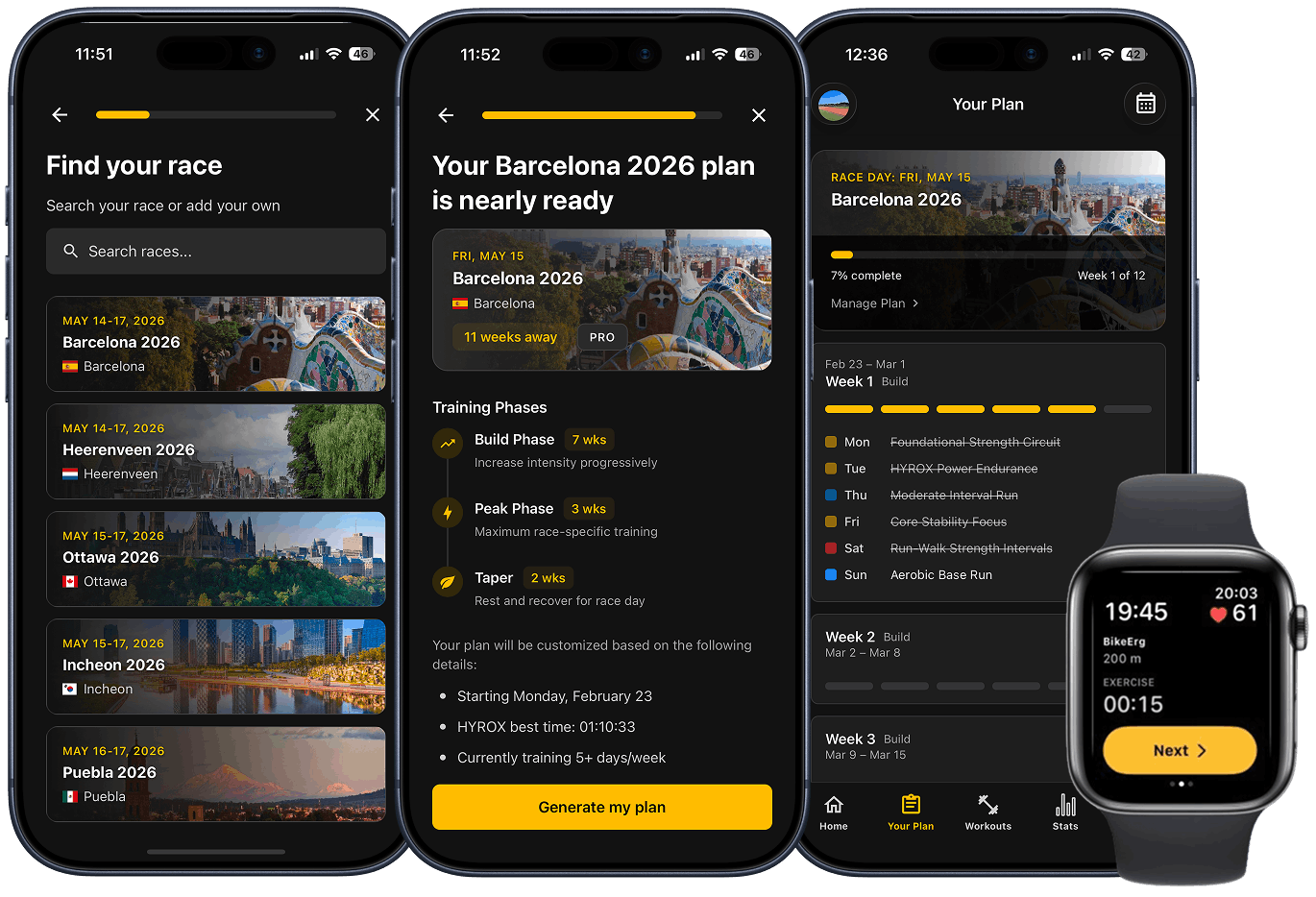
Ready for a structured plan?
Stop guessing what to do next. TrainRox builds personalized HYROX and hybrid fitness training plans based on your fitness level and race goals.
Get daily workouts, track your progress, and arrive at the start line knowing you've done the right work.


First week free. Cancel anytime.