
Key performance benchmarks to track progress
Training
What to track (and how) to know if your training is working, beyond just finish time.
Beyond the Finish Line: Key Performance Benchmarks to Track Your Training Progress
As an intermediate athlete, you’ve moved beyond simply finishing. You’re striving for improvement, pushing your limits, and investing significant time and effort into your training. But how do you truly know if that effort is translating into tangible progress? Relying solely on your finish time, while important, paints an incomplete picture. To truly understand the effectiveness of your training and stay motivated, you need to dive deeper and track key performance benchmarks.
This article will equip you with the knowledge and practical strategies to go beyond the stopwatch and gain a comprehensive understanding of your athletic development. We’ll explore what to track, how to track it, and why these metrics matter in keeping you motivated and on the path to achieving your goals.
Why Go Beyond Finish Time?
Finish time is an output metric – it’s the ultimate result of your training. However, it’s influenced by a multitude of factors on any given day, including nutrition, sleep, weather, and even race-day psychology. While a faster finish time is a great indicator of progress, it doesn't tell you why you’re improving or where your specific strengths and weaknesses lie.
Tracking a wider range of performance benchmarks provides a more nuanced and insightful view of your development. It allows you to:
- Identify Strengths and Weaknesses: Pinpointing areas where you excel and where you need improvement helps you tailor your training more effectively.
- Monitor Training Load and Recovery: Understanding your physiological response to training is crucial for preventing overtraining and injury.
- Track Physiological Adaptations: Many benchmarks measure the underlying physiological changes that contribute to improved performance, even if they don't directly impact your finish time on a single occasion.
- Maintain Motivation: Seeing consistent improvement across multiple metrics, even on days when your finish time isn't spectacular, can be incredibly motivating. It reinforces the value of your hard work.
- Make Informed Training Adjustments: By understanding what’s working and what’s not, you can make smarter decisions about your training plan, ensuring you’re optimizing your efforts.
Key Performance Benchmarks to Track:
Let's delve into the essential benchmarks that will illuminate your training journey:
1. Physiological Metrics: These are the bedrock of your athletic potential, reflecting the fundamental improvements your body is making.
Heart Rate Zones (Resting & During Exercise):
- What to Track: Your resting heart rate (RHR) and your heart rate response during specific training intensities (e.g., steady-state runs, intervals).
- How to Track: A reliable heart rate monitor (chest strap or advanced wrist-based) is essential. Track your RHR first thing in the morning before getting out of bed. Record your average and peak heart rates during your workouts.
- Why it Matters: A decreasing RHR is a classic indicator of improved cardiovascular fitness. A more efficient heart can pump more blood with each beat, meaning your heart rate will be lower at the same intensity. Observing your heart rate at different paces helps you understand your aerobic and anaerobic thresholds.
- Actionable Advice: Aim for a gradual decrease in your RHR over weeks and months. If your RHR spikes significantly on a given day, it could be a sign of inadequate recovery or illness, prompting you to adjust your training.
VO2 Max (Maximal Oxygen Uptake):
- What to Track: Your body's maximum capacity to consume and utilize oxygen during intense exercise.
- How to Track: While often measured in a lab setting, you can get a good estimate through field tests. The Cooper Test (running as far as possible in 12 minutes) is a common method. Online calculators can then estimate your VO2 max based on your distance and time.
- Why it Matters: VO2 max is a direct measure of your aerobic capacity. A higher VO2 max means your body is better at delivering oxygen to your muscles, which is crucial for endurance performance.
- Actionable Advice: Incorporate interval training and tempo runs into your schedule, as these are highly effective at improving VO2 max. Retest your VO2 max every 6-8 weeks to gauge progress.
Lactate Threshold:
- What to Track: The intensity at which lactate begins to accumulate in your blood faster than it can be cleared.
- How to Track: This is best measured in a lab setting with blood lactate testing. However, you can approximate it by performing a time trial (e.g., a 20-minute run at a comfortably hard pace) and monitoring your heart rate at the end. Many GPS watches also offer estimated lactate threshold features.
- Why it Matters: Your lactate threshold determines how fast you can sustain a pace without accumulating debilitating fatigue. Increasing your lactate threshold means you can run faster for longer.
- Actionable Advice: Focus on training sessions at or slightly above your lactate threshold (tempo runs) to improve your body's ability to clear lactate.
2. Performance-Specific Metrics: These directly relate to your chosen sport or activity and provide more granular insights.
Pace/Power at Specific Heart Rate Zones:
- What to Track: The pace (for runners) or power output (for cyclists) you can sustain within different heart rate zones.
- How to Track: Log your pace/power alongside your heart rate during training sessions. Use a GPS watch or cycling computer.
- Why it Matters: As your fitness improves, you should be able to maintain a faster pace or higher power output at the same heart rate. This indicates increased aerobic efficiency.
- Actionable Advice: Regularly review your data from steady-state workouts. If you find yourself consistently running faster at your usual "easy" heart rate, that's a clear sign of progress.
Cadence (Running) / Stroke Rate (Swimming):
- What to Track: The number of steps per minute you take while running or the number of strokes per minute you take while swimming.
- How to Track: Many GPS watches and dedicated running/swimming devices track cadence. You can also manually count for 30 seconds and multiply by two.
- Why it Matters: An optimal cadence can improve running economy and reduce the risk of injury. For swimmers, efficient stroke rate contributes to better propulsion and less drag.
- Actionable Advice: Aim for a consistent and efficient cadence. If your cadence is too low, focus on taking quicker, lighter steps. If it's too high, you might be overstriding.
Strength & Muscular Endurance:
- What to Track: The weight you can lift for a certain number of repetitions (e.g., your 5-rep max) in key strength exercises, or the number of repetitions you can perform with a specific weight.
- How to Track: Keep a detailed logbook of your strength training sessions, including exercises, sets, reps, and weight.
- Why it Matters: Improved strength and muscular endurance are vital for power, injury prevention, and maintaining good form during prolonged efforts.
- Actionable Advice: Gradually increase the weight or repetitions over time (progressive overload). Focus on compound movements like squats, deadlifts, and lunges, which have a significant impact on athletic performance.
Flexibility & Mobility:
- What to Track: Your range of motion in key joints and your ability to perform specific stretches or movements.
- How to Track: Perform a few key stretches (e.g., hamstring stretch, hip flexor stretch, shoulder mobility exercises) and note how far you can reach or the ease with which you can perform them. You can also use apps that offer guided mobility assessments.
- Why it Matters: Good flexibility and mobility are crucial for efficient movement, injury prevention, and maintaining proper posture during exercise.
- Actionable Advice: Incorporate regular stretching and mobility work into your warm-ups and cool-downs. Pay attention to areas that feel tight or restricted.
3. Perceived Effort & Well-being: Don't underestimate the power of your own observations and how you feel.
Rate of Perceived Exertion (RPE):
- What to Track: A subjective measure of how hard you feel you are working on a scale of 1-10.
- How to Track: After each training session, assign an RPE score. Note any contributing factors to your perceived effort (e.g., fatigue, heat, motivation).
- Why it Matters: RPE can help you gauge the intensity of your workouts, especially when heart rate data might be skewed (e.g., due to caffeine or stress). It also helps you connect your physiological response to how you feel.
- Actionable Advice: Use RPE in conjunction with objective data. If your heart rate is lower than usual for a given effort but your RPE is high, it might indicate you need more rest.
Sleep Quality & Duration:
- What to Track: How many hours you sleep each night and how rested you feel upon waking.
- How to Track: Use a sleep tracking app or simply keep a journal of your sleep patterns and how you feel throughout the day.
- Why it Matters: Sleep is when your body repairs and rebuilds itself. Consistent, quality sleep is paramount for athletic progress and preventing burnout.
- Actionable Advice: Prioritize 7-9 hours of quality sleep per night. Establish a consistent sleep schedule and create a relaxing bedtime routine.
Mood & Energy Levels:
- What to Track: Your general mood and energy levels throughout the day and around your training sessions.
- How to Track: Keep a daily journal or use a simple rating system.
- Why it Matters: Your mental state significantly impacts your training. Low mood and energy can be indicators of overtraining, poor nutrition, or underlying stress.
- Actionable Advice: Be mindful of your mental well-being. If you consistently feel low or drained, it’s time to reassess your training load and lifestyle.
Putting It All Together: Your Tracking Strategy
- Choose Your Core Metrics: You don't need to track everything. Select 3-5 key metrics that are most relevant to your goals and your sport. For an intermediate runner, this might include heart rate zones, pace at threshold, and RPE.
- Utilize Technology: Invest in a reliable heart rate monitor and a GPS watch or cycling computer. These devices will automate much of the data collection.
- Maintain a Training Log: Whether it's a digital app or a physical notebook, keep a consistent record of your workouts, including duration, intensity (or RPE), and any relevant metrics.
- Regularly Review Your Data: Don't just collect data; analyze it. Dedicate time each week to review your progress, identify trends, and make informed adjustments to your training.
- Benchmark Periodically: Schedule re-testing of key physiological metrics (like VO2 max or lactate threshold) every 6-8 weeks to get a clear picture of your progress.
- Listen to Your Body: The most important benchmark is how you feel. If you’re consistently pushing through pain or exhaustion, even if your data looks good, it’s a sign to back off.
- Celebrate Small Wins: Acknowledge and celebrate improvements, no matter how small. This consistent positive reinforcement is a powerful motivator.
By embracing these key performance benchmarks, you'll gain a far more profound understanding of your athletic journey. You’ll move beyond simply crossing the finish line and begin to truly appreciate the physiological and mental adaptations that are propelling you towards your goals. This data-driven approach will not only enhance your performance but also solidify your motivation, ensuring you stay inspired and committed to your athletic pursuits.
Related Articles
How to train with limited time
Even with just 3 sessions a week, you can make real HYROX progress. Here's how.
The role of mobility in HYROX performance
How mobility training can improve your HYROX performance and prevent injury.
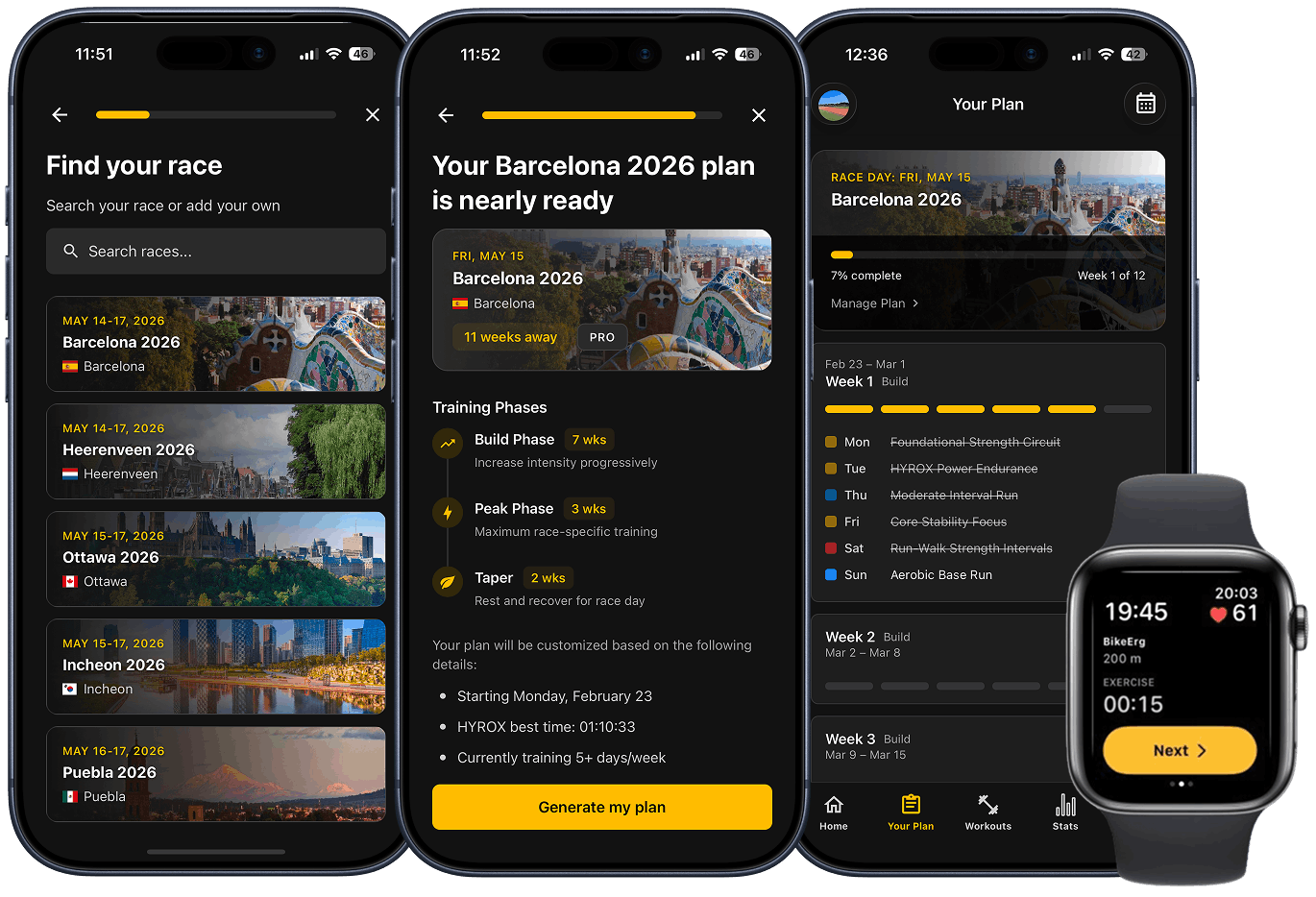
Ready for a structured plan?
Stop guessing what to do next. TrainRox builds personalized HYROX training plans based on your fitness level and race goals.
Get daily workouts, track your progress, and arrive at the start line knowing you've done the right work.

